
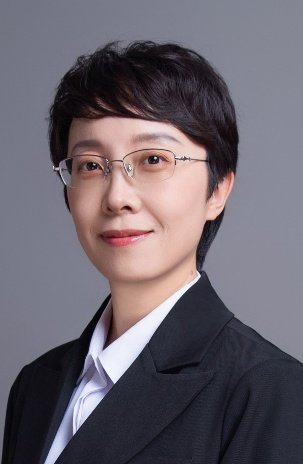
张烨
◆ 导师基本情况
姓 名:张烨,心理学博士,教授(博士生导师)
办公电话:0571-28867717
邮 箱:zhye@hznu.edu.cn.
指导专业:临床认知神经科学(报考代码:0402Z2)、应用心理(报考代码:045400)
1. 语言障碍的行为康复训练和TMS精准治疗
2. 运动障碍的TMS精准治疗
3. 汉语阅读与产出的认知神经机制
◆ 主讲课程
1. 认知神经科学基础
2. 心理学实验程序设计
3. 生理心理学
4. 磁共振引导的精准定位经颅磁刺激技术
5. 应用心理
6. 临床实验心理学
2001年9月—2005年6月,内蒙古师范大学,理学学士
2006年9月—2009年6月,西南大学,教育学硕士
2009年9月—2012年6月,西南大学,教育学博士
2010年7月—2012年5月,加拿大蒙特利尔大学 联合培养博士
2012年7月—2025年12月,杭州师范大学,副研究员、副教授
2026年1月至今,杭州师范大学,教授
◆ 学术简介
当前研究工作聚焦于汉语言障碍、运动障碍的临床评估与精准TMS调控与转化研究。以第一作者或通讯作者身份在《Aphasiology》、《Brain stimulation》、《Archives of physical medicine and rehabilitation》等国际权威期刊发表学术论文30余篇,成果涵盖卒中后言语与运动功能障碍的康复干预、脑功能异常活动的动态演变及其恢复机制,以及TMS精准调控技术的优化与作用机制探索。目前已主持国家及省部级科研项目5项,参与国家级及国际合作项目共5项,研究工作持续推动汉语神经语言与运动康复的前沿发展。
◆ 主持教学科研项目(省部级以上)
1. 浙江省自然科学基金一般项目,同步 rTMS 和内隐言语训练对亚急性期卒中后失语的语言改善及神经可塑性机制,10万元,2024.01–2026.12。
2. 国家科技重大专项子课题认知行为测验, 中国学龄儿童脑智发育队列研究—杭州师范大学队列建设,200万元,2022.01–2026.12。
3. 浙江省自然科学基金一般项目, 视觉系统中汉字识别的神经特异性研究,9万元,2018.01–2020.12。
4. 国家自然科学基金青年项目,识别电位认知本质和神经定位研究,24万元,2015.01–2017.12。
5. 浙江省自然科学基金青年项目,汉字识别早期加工的认知神经机制研究,5万元,2014.01–2016.12。
◆ 代表性论著
1. Xu, Y., Zeng, M., Mao, L., Wu, J., Wu, L., Hu, D., Tao, C., W, C., Wang, J. *, Wang, D. *, & Zhang, Y.* The Chinese Detection Test for Language Impairments (CDTLA): A Validation and Cross-Cultural Adaptation Study to Enhance Post-Stroke Aphasia Management. Aphasiology, in press.
2. Zhang, Y.*, Liang, W., Zhou, N., Pan, H., Zang, Y., Zhao, R., Lu, Y., & Wang, D. (2025). A novel integrated MRI-guided rTMS protocol for motor and language recovery. Brain stimulation, 18(5), 1493–1495.
3. Luo, F., Zhang, Y.*, Liang, W., Blais, C., Plouffe Demers, M. P., Fiset, D., Sun, D., & Chen, B.* (2025). Stroke features in the Chinese character recognition. Quarterly journal of experimental psychology, 17470218251357441. Advance online publication.
4. Lu, Y., Mao, L., Wang, P., Wang, C., Hartwigsen, G.*, & Zhang, Y.* (2024). Aberrant neural oscillations in poststroke aphasia. Psychophysiology. 61(11), e14655.
5. Wang, C., Nie, P., Wang, P., Wang, Y., Zang, Y., & Zhang, Y. *(2024). The therapeutic effect of transcranial magnetic stimulation on post-stroke aphasia and the optimal treatment parameters: A Meta-analysis. Archives of physical medicine and rehabilitation, 105(7):1388-1398.
6. Feng, M., An, L., Wang, P., Zhang, Y.*(2023). Visual similarity with L1 facilitates the neural specialization for scripts of L2. Journal of Neurolinguistics, 65, 101113.
7. Luo, C., Chen, W., VanRullen, R., Zhang, Y.*, & Gaspar, C. M.* (2022). Nudging the N170 forward with prior stimulation-Bridging the gap between N170 and recognition potential. Human brain mapping, 43(4), 1214–1230.
8. Chen, J., Sun,D.,Wang, P.,Lv., Y. & Zhang,Y.*(2022). Brain mechanism of Chinese character processing in the rapid stream stimulation. Journal of Neurolinguistics, 63, 101084.
9. Chen, J. & Zhang, Y.*(2022). Chinese Character Processing in Visual Masking. Frontiers in Psychology, 12:763705.
10. Feng, M., Sun, D., & Zhang, Y.* (2021). Recognizing Chinese Characters in Peripheral Vision: Different Levels of Processing of Character. Journal of psycholinguistic research, 50(2), 275–291.
11. Luo, C., Chen, W., Zhang, Y.*, Gaspar, C.M.*(2019). Rapid stream stimulation can enhance the stimulus selectivity of early evoked responses to written characters but not faces. PLoS ONE 14(3): e0213637.
12. Yang, Q.*, Luo, C., & Zhang, Y.*(2017). Individual Differences in the early recognition of moral information in lexical processing: an event-related potential study. Scientific Reports, 7: 1475.
13. Luo, C., Chen, W., & Zhang, Y.* (2017). The Inversion Effect for Chinese Characters is modulated by radical organization. Journal of Psycholinguistic Research, 46:791–803.
14. 孙丹 & 张烨* (2016). 双侧梭状回面孔区在面孔加工中的功能分工与协作. 心理科学进展,24(4), 510–516.
15. 张烨*, 邵涵钰, GASPAR,等(2015). 左侧颞下叶在面孔信息加工中的作用:一项ECoG案例研究. 科学通报, 25: 2438-2446.
16. Zhang, Y.*, Liu Q., Yang Q., & Zhang Q.* (2010). Electrophysiological correlates of early processing of visual word recognition: N2 as an index of visual category feature processing. Neuroscience Letters, 473, 32–36.
17. Zhang, Y., Qiu, J., Huang, H., Bao, B., & Zhang, Q.* (2009). Chinese character recognition in mirror reading: Evidence from event-related potential. International Journal of Psychology, 44 (5), 360–368.
18. Zhang, Y., Liu, Q., & Zhang, Q.* (2009). The recognition potential reflects an intermediate level of visual representation. Neuroscience Letters, 2009, 454, 86–90.
19. Zhang, Y.*, Yuan, J., Bao, B., & Zhang, Q.*(2008). The recognition potential and rotated Chinese Character. Brain Research, 1233, 98-105.
20. 张烨, 刘强, 张庆林(2011). 视觉系统中类别信息加工区的特异性. 心理科学进展, 19(1), 42-49.
21. 张烨, 张庆林(2010). 识别电位认知功能探析. 心理科学进展, 18 (1), 28-33.
地址:浙江省杭州市拱墅区金华路120号 杭州师范大学金华路校区1号楼
电话:0571-28865537 邮箱:linchuangyixy@hznu.edu.cn
研招电话:临床0571-28860227 口腔0571-28865516 心理0571-28867717
版权所有 © 2021杭州师范大学临床医学院口腔医学院
公安备案号:33011002011919 浙ICP备11056902号-1

